
Solution
Wall-Climbing Pool Cleaning Robot Control System
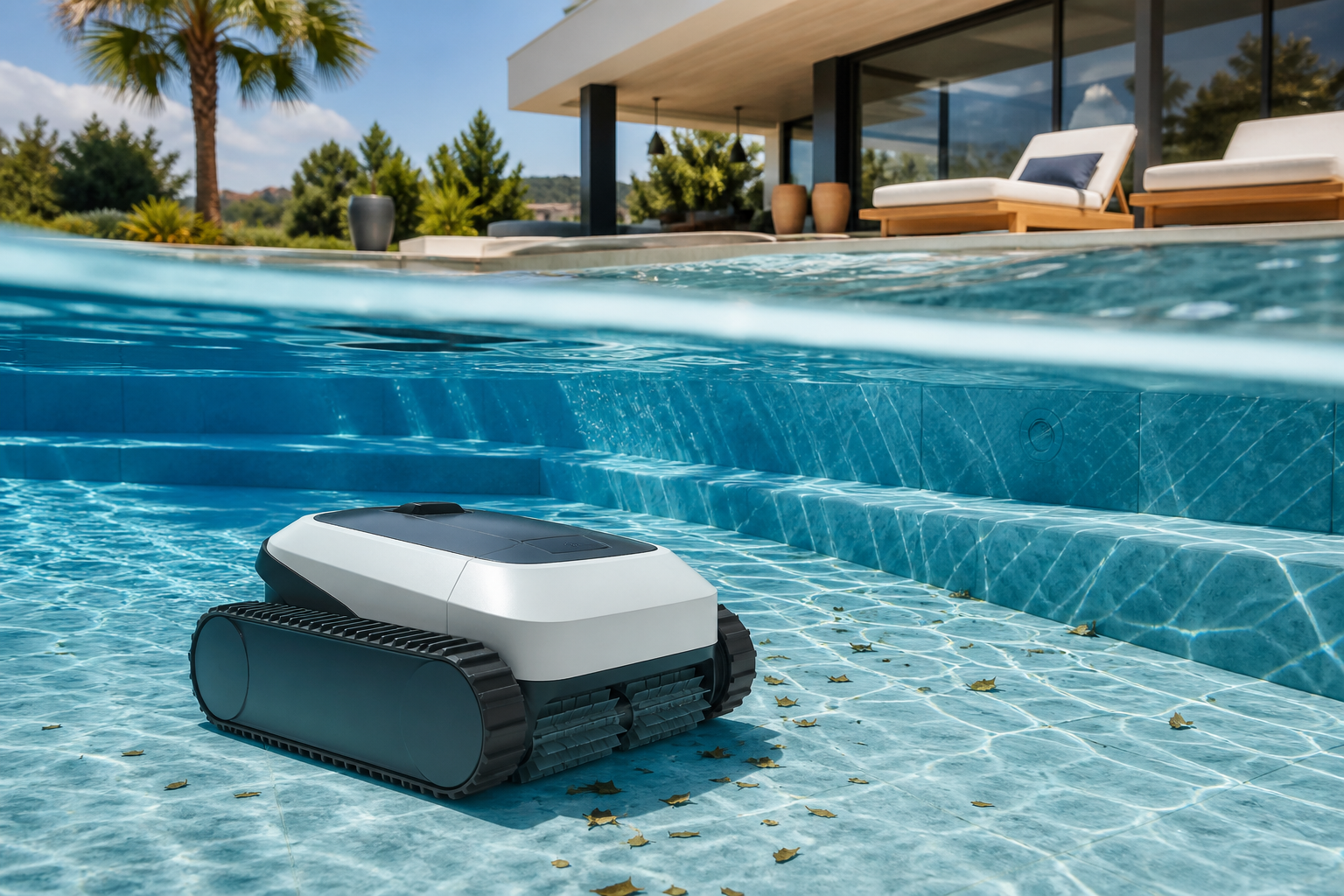
Wall-climbing cordless pool-cleaning robot control with full-surface coverage planning, waterline cleaning, and slip-aware motion.
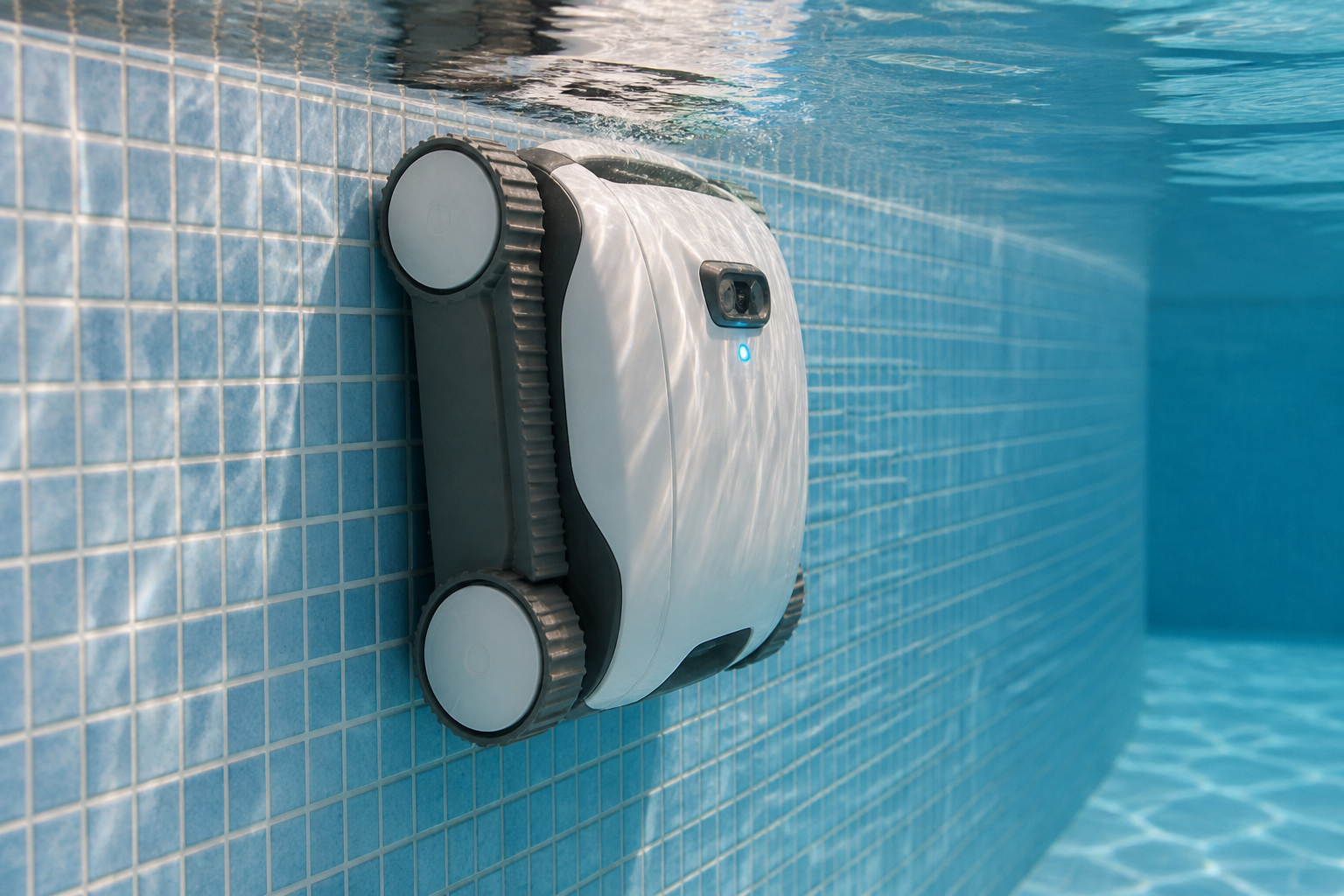
The QianEasy Wall-Climbing Pool Cleaning Robot Control System is built for residential, villa, and compact commercial pools. It turns a cordless cleaner into an autonomous underwater mobile robot and coordinates perception, localization, coverage planning, traction, brushing, and pump control so one platform can clean the pool floor, walls, corners, slopes, steps, and waterline without a tether cable defining its route.
Full-surface autonomous cleaning
A pool is a constrained three-dimensional workspace rather than a simple flat floor. The robot must infer boundaries, estimate its motion without GPS, distinguish floor and wall attitudes, compensate for underwater slip, and keep coverage organized as battery energy changes. The control system treats every mission as a closed loop: sense → estimate → plan → execute → verify → recover.
Coverage planning and intelligent navigation
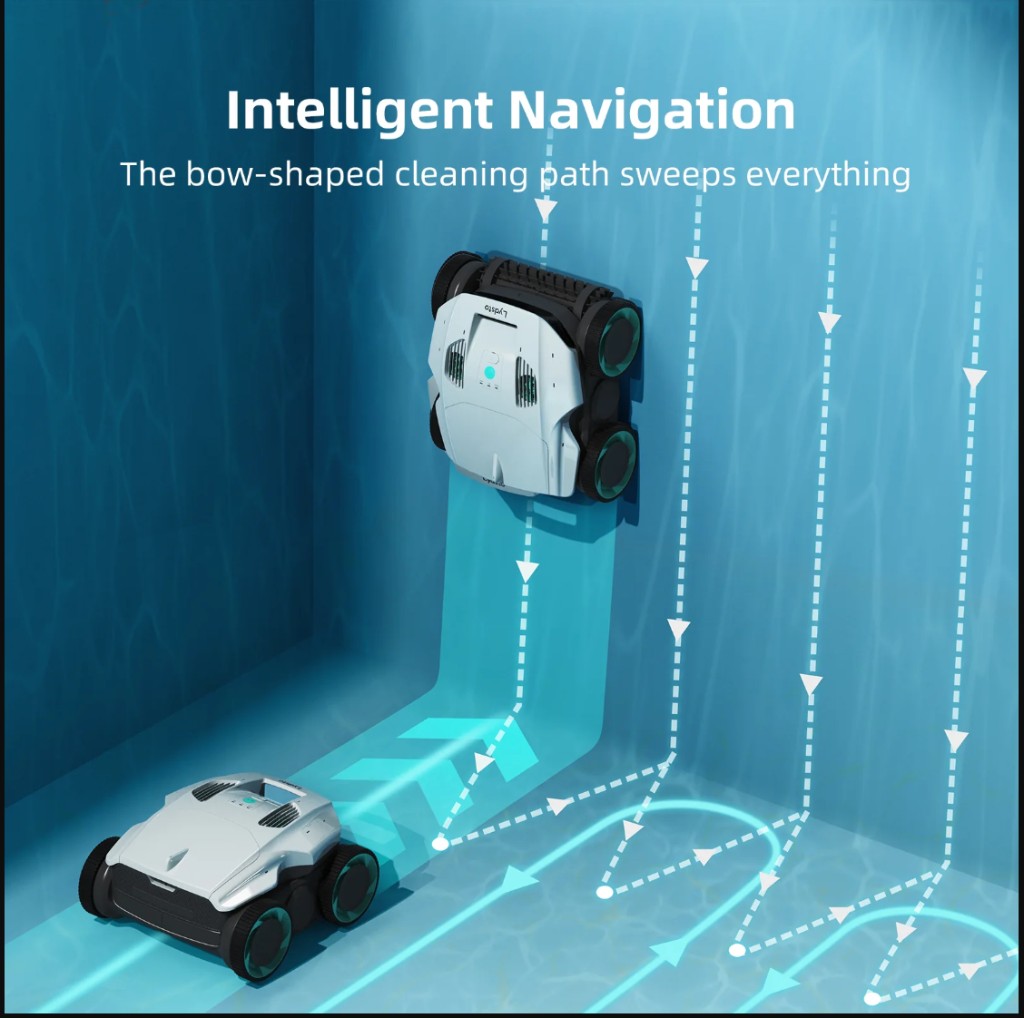
After entering the water, the robot establishes a motion reference from wheel or track odometry, inertial sensing, motor feedback, and configurable boundary sensors. A bow-shaped (boustrophedon) path divides the pool into orderly cleaning lanes. Boundary events and accumulated motion are used to correct the route, while missed or interrupted areas can be scheduled for revisit.
Core user benefits
- Organized coverage — planned lanes, edge handling, and missed-area revisit replace purely random movement
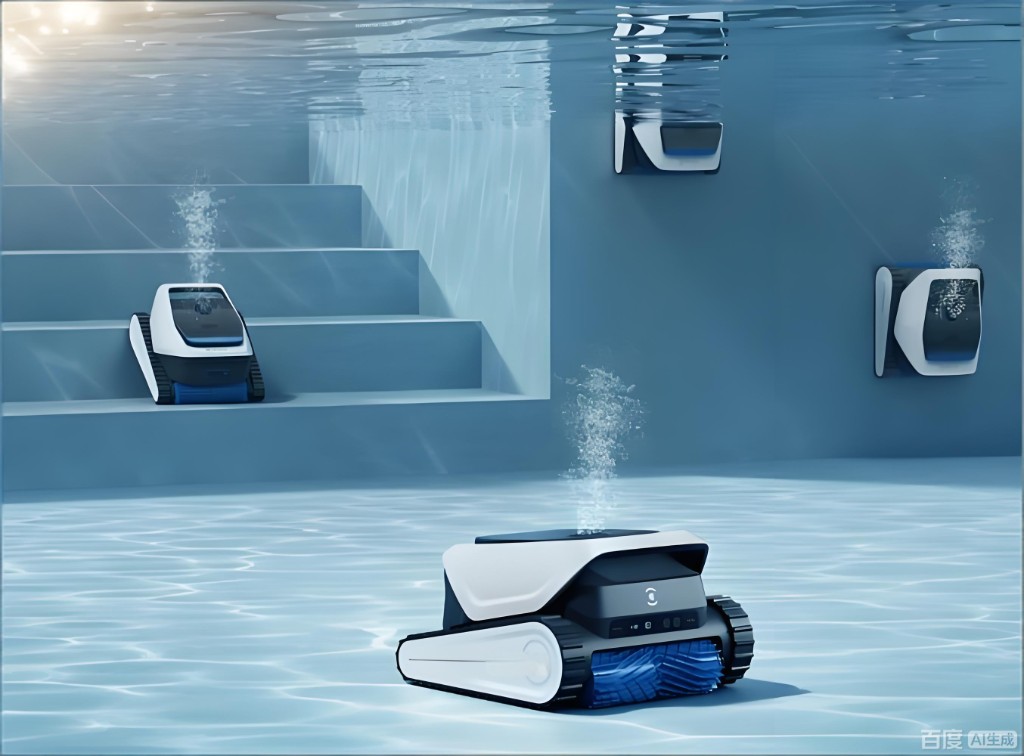
- Multi-surface mobility — coordinated suction, traction, and attitude control support floor-to-wall and wall-to-waterline transitions
- Slip-aware control — motor current, odometry, and inertial feedback help detect loss of traction and adapt drive commands
- Cleaning-motion coordination — brushes and filtration flow are scheduled with vehicle speed and surface state
- Safer unattended runs — lift-out, stall, overcurrent, sensor timeout, low-battery, and watchdog states lead to controlled responses

Technical architecture
| State estimation | IMU, wheel/track odometry, motor feedback, and configurable range or boundary sensing |
|---|---|
| Coverage planning | Bow-shaped lanes, edge following, adaptive turn strategy, and interrupted-area revisit |
| Surface recognition | Floor, slope, wall, corner, step, and waterline states inferred from attitude and drive feedback |
| Motion control | Closed-loop left/right drive, slip detection, wall-transition control, and recovery maneuvers |
| Cleaning control | Brush, suction/pump, filtration, and travel-speed coordination for different surfaces |
| Energy management | Mission scheduling, low-battery response, completion strategy, and configurable retrieval behavior |
| Safety | Water-entry/lift-out detection, stall and overcurrent protection, sensor watchdogs, and fail-safe stop |
| Product integration | Modular interfaces for motors, pumps, batteries, sensors, BLE/Wi-Fi, app status, and OTA capability |
Typical mission flow
- Launch and self-check — verify sensors, drive, pump, brush, and battery state.
- Boundary acquisition — establish an initial reference from movement and pool contacts.
- Floor coverage — execute organized lanes with edge and obstacle responses.
- Wall and waterline cycle — transition surfaces while controlling adhesion and travel speed.
- Recovery or completion — revisit interrupted areas, handle stuck states, and finish in a retrievable condition.
The final sensor set and navigation strategy are selected for the pool geometry, chassis, drive form, cleaning mechanism, battery capacity, and target cost. QianEasy can support algorithm integration, motion-control tuning, sensor selection, embedded implementation, and prototype-to-product validation.
Ask about a wireless wall-climbing control package via Contact.